
Fashion / Accessories
A Small Wardrobe, More Ways to Get Dressed
A practical way to build reliable outfit combinations, spot genuine wardrobe gaps and shop with a clearer purpose.
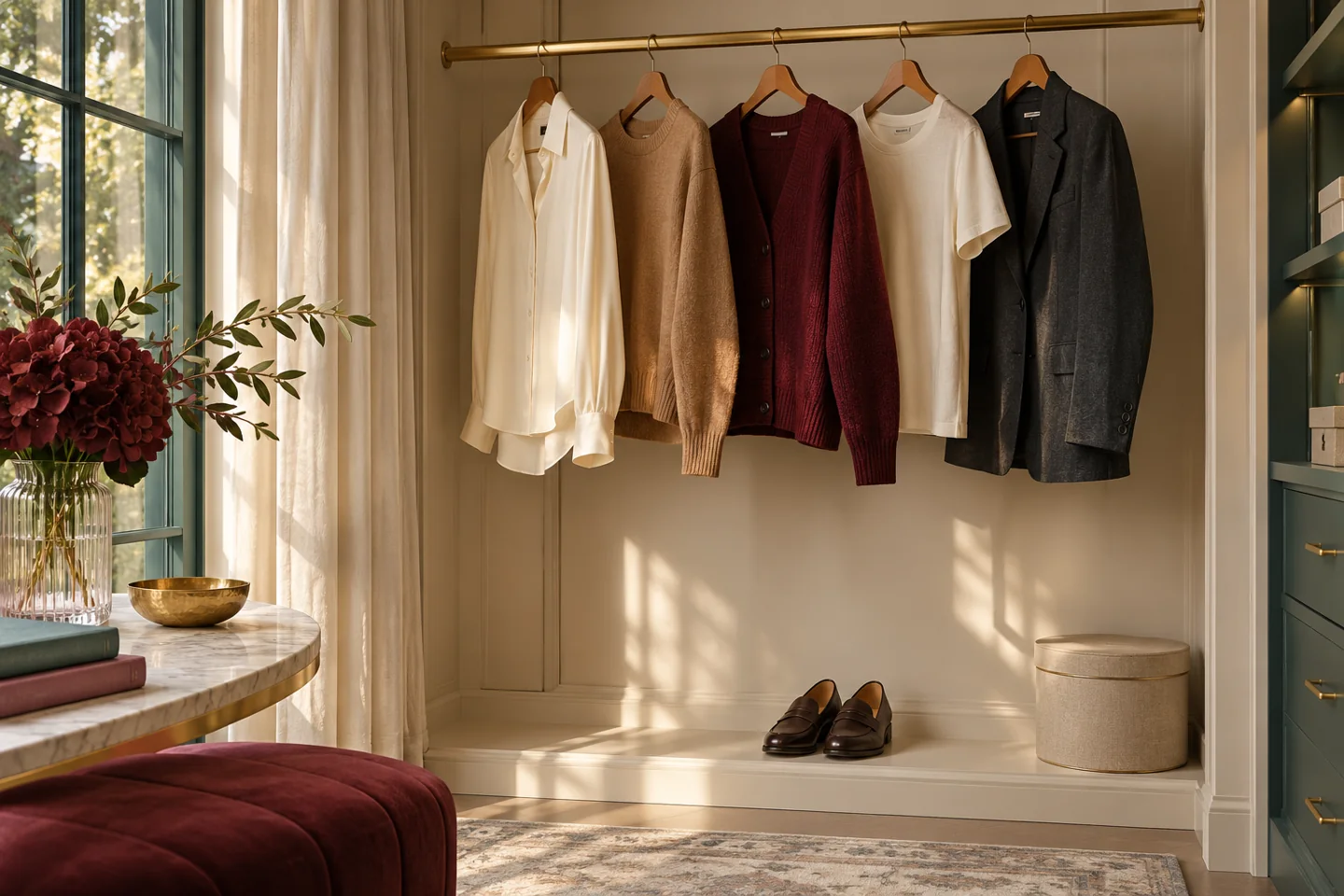
Editorial illustration created with AI for Click and Chic Hub.
A wardrobe does not need to be large to offer variety. It needs pieces that work together, suit your actual week and feel comfortable enough to wear repeatedly. Before buying another item, try looking at your wardrobe as a set of combinations rather than a collection of separate purchases.
Start with the week you actually have
Start with the week you really have. Write down the situations you dress for most often: working at home, commuting, school runs, meeting friends or an occasional evening out. Notice which situations are easy to dress for and which repeatedly leave you stuck. A wardrobe built around an imagined lifestyle can look appealing on a rail while making ordinary mornings harder.
Make three outfits earn their place
Next, choose three outfit foundations from pieces you already own. One might be trousers and a simple top; another, a skirt and knitwear; a third, a dress with a light layer. Put each combination on. Check movement, comfort and proportions in a mirror. An outfit that only works when you stand still is unlikely to become a reliable favorite.
Give each foundation two different finishing options. Change the shoes, add a belt you already own or switch from a structured bag to a softer one. The aim is not to force every accessory into every outfit. It is to find a few combinations that feel intentional without needing a completely different set of clothes.
Let color connect the details
Color can help, but there is no compulsory capsule palette. Start with colors you already enjoy wearing together. If you prefer brighter pieces, repeat one color in a small detail to connect the outfit. If you favor neutrals, use differences in texture or shape for interest. Comfort with your choices matters more than following a fixed number of colors.
Shop for a purpose, not a possibility
Keep a short gap list. Instead of writing “more tops”, describe the job a missing piece would do: a long-sleeved layer that works under a jacket, for example. Check whether the pieces you own can already fill that role. Repairing a fastening, adjusting a hem or rediscovering an overlooked item may solve the problem without a purchase.
When a purchase is useful, compare it with your existing wardrobe before adding it to your basket. Can you name several outfits for it? Check the seller’s size chart, measurements, fabric description and care instructions rather than relying on the product photograph alone. Fit varies, so review the retailer’s current returns policy as well.
Keep the combinations you love
Finally, make a small outfit album on your own device if you find that helpful. Photograph the combinations you genuinely like and label the occasions they suit. This is a reference for busy mornings, not a rulebook. The most useful wardrobe is one that gives you repeatable choices while leaving room for your own taste.
Start with what you own and let a specific gap guide any shopping. A different texture, a favorite color, or a familiar outfit styled a new way can bring a fresh perspective to your everyday wardrobe.